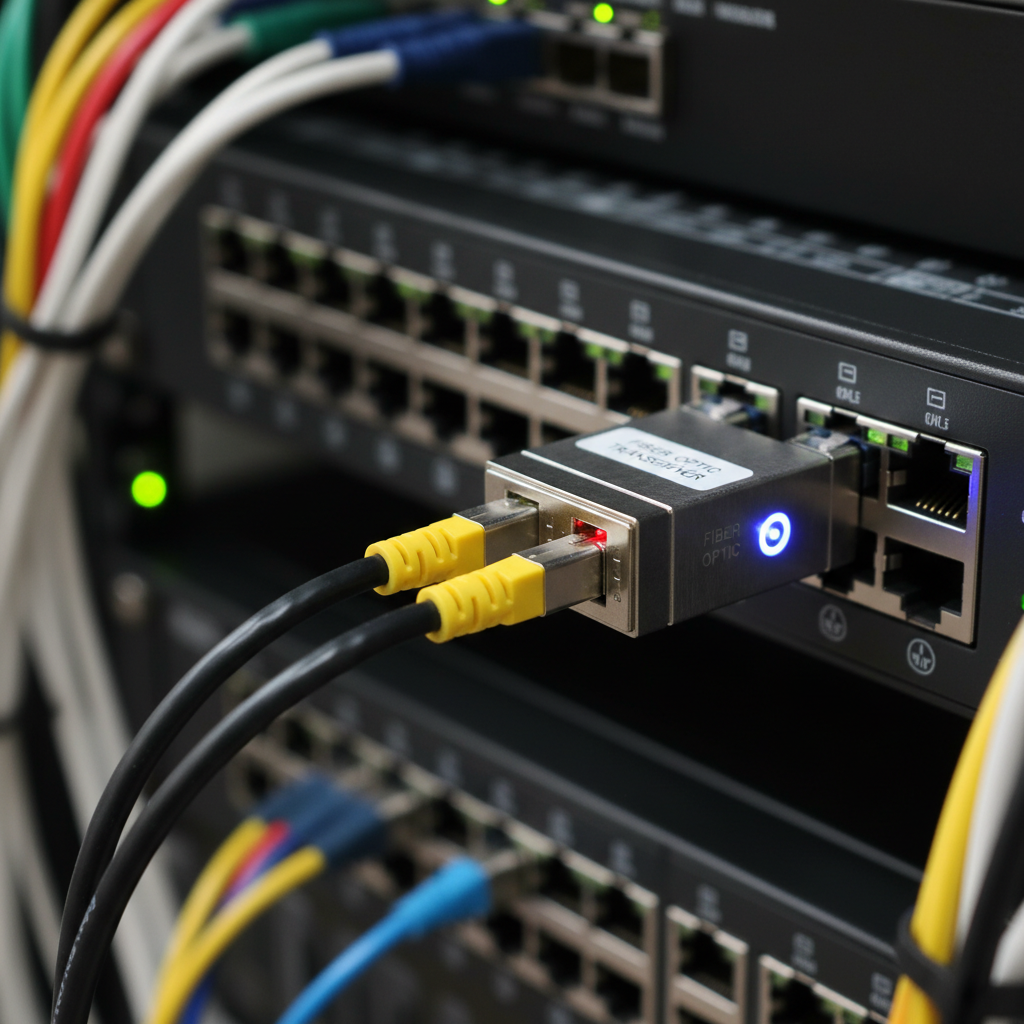
Power over Ethernet (PoE) systems have become the backbone of modern industrial and commercial networks. From supplying data to high-definition IP cameras to powering complex IoT sensors and communication modules, PoE technology eliminates the need for separate electrical wiring. However, as we move into 2026 with the widespread adoption of PoE++ (Type 4), the amount of electrical current flowing through standard RJ45 connectors has increased dramatically.
With higher power levels comes a critical safety concern: the risks associated with manual disconnection. A POE SWITCH EJECTOR provides a controlled, secure, and standardized method for removing network cables from active ports. By mitigating the risks of electrical arcing and mechanical stress, this specialized tool is no longer an accessory—it is a necessity for maintaining system continuity in defense, industrial, and high-density commercial environments.
1. Preventing Electrical Arcing and Contact Degradation
One of the primary “hidden” risks in high-power PoE installations is electrical arcing. This phenomenon occurs during the millisecond a connector is pulled out of a port while current is still flowing ($P = V \times I$). When the physical contact is broken, the voltage can bridge the tiny air gap, creating a plasma arc.
The impact of arcing on a standard RJ45 connector includes:
-
Contact Pitting: The arc vaporizes small amounts of the gold plating on the pins.
-
Carbon Buildup: Successive arcs create non-conductive layers that increase resistance.
-
Thermal Stress: Localized heat can damage the plastic housing of the switch port.
Using a POE SWITCH EJECTOR ensures that the cable is released through a precise, linear motion. This controlled disengagement minimizes the duration and intensity of potential arcing, protecting the long-term electrical integrity of the switch. In mission-critical systems where equipment must run 24/7, reducing connector wear directly translates to lower downtime and fewer hardware replacements.
2. Managing Mechanical Stress on High-Density Ports
Modern network racks are more congested than ever. High-density switches often house 48 or more ports in a single 1U space. Manually pulling a cable in such a cramped environment often leads to “lateral stress”—the tendency to wiggle or twist the connector to get it to release.
A POE SWITCH EJECTOR eliminates this risk by applying uniform pressure to the release tab and the connector body. This is particularly important for:
-
Preventing Port “Lifting”: Excessive force can cause the internal RJ45 jack to detach from the switch’s PCB (Printed Circuit Board).
-
Protecting Cable Plugs: Repeated manual pulling can weaken the crimp between the Ethernet cable and the RJ45 plug.
-
Neighboring Cable Integrity: The ejector’s narrow profile prevents the accidental dislodging of adjacent cables, which is a common cause of localized network outages during maintenance.
3. Technician Safety and Ergonomic Efficiency
Safety isn’t just about the hardware; it’s about the people maintaining it. As PoE wattages climb toward $90W$ and beyond, the potential for minor electrical shocks or thermal burns during a “hot unplug” increases. Furthermore, technicians often work in awkward positions—high up on ladders, in ceiling voids, or in cramped telecommunication closets.
The POE SWITCH EJECTOR provides an ergonomic advantage:
-
One-Handed Operation: Allows technicians to maintain a steady grip on their surroundings while safely releasing a cable.
-
Reduced Grip Fatigue: The mechanical advantage of the ejector reduces the force required to depress the locking tab.
-
Visual Verification: Most ejectors ensure the tab is fully depressed before the cable can move, preventing the “snagging” that often breaks the plastic clip.
Technical Comparison: Manual Removal vs. POE SWITCH EJECTOR
| Risk Factor | Manual Disconnection | Using a POE SWITCH EJECTOR |
| Electrical Arcing | High (Uncontrolled gap speed) | Minimal (Controlled linear speed) |
| Contact Wear | Cumulative damage to gold plating | Preserved contact integrity |
| Lateral Stress | Significant (Twisting/Pulling) | Zero (Guided extraction) |
| Accidental Disconnects | Common in high-density racks | Prevented by precise tool access |
| Technician Fatigue | High in large-scale maintenance | Ergonomically optimized |
4. Supporting Industry Compliance and Best Practices
Compliance with standards like IEEE 802.3bt and TIA-568 requires more than just high-quality cabling; it demands proper maintenance procedures. Prestonics assists engineering teams in selecting the right POE SWITCH EJECTOR and other PoE-safe accessories that align with these strict performance and reliability standards.
By implementing the use of a POE SWITCH EJECTOR in your standard operating procedures (SOP), you demonstrate a commitment to hardware longevity and operator safety. This is especially vital in sectors like aerospace and defense, where every component failure has high stakes.
Build a Safer, More Reliable Network
The complexity of modern PoE architectures requires a proactive approach to maintenance. Integrating a POE SWITCH EJECTOR into your toolkit is a simple yet effective way to protect your significant investment in networking hardware.
Prestonics is dedicated to supporting integrators and engineering teams with the highest quality components and accessories for the most demanding environments. Ready to enhance your system’s safety and reliability?