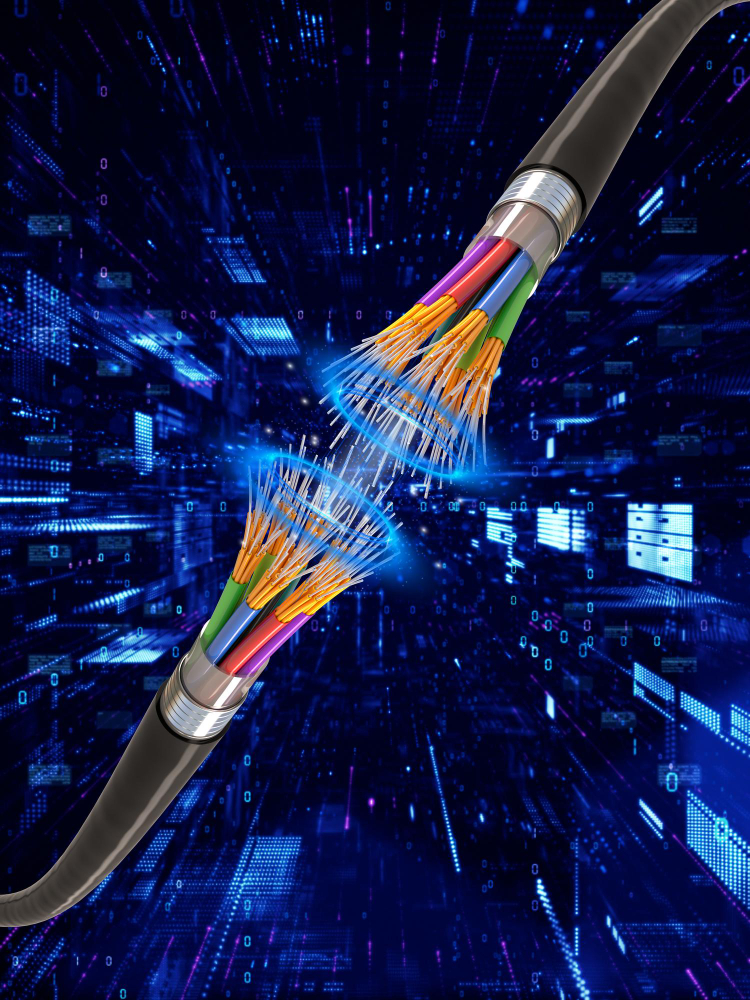
As data volumes continue to grow across industries, organizations rely increasingly on high speed communication infrastructure to maintain efficient operations. Scalability, low latency, and reliable throughput all depend on the quality of the optical components used within a network. A Fiber Optical transceiver plays a central role in this process by converting electrical signals into optical ones and back again, allowing data to travel at extremely high speeds across fiber lines with minimal loss. These devices support data centers, industrial automation, telecommunications, and defense communication platforms where uninterrupted connectivity is essential.
Improving Bandwidth and Reducing Latency
One of the greatest advantages of optical transceivers is their ability to support exceptionally high data rates without the limitations associated with copper cabling. By transmitting data as light rather than electrical impulses, networks achieve far higher bandwidth capacity with significantly reduced signal degradation. This becomes particularly important in applications such as cloud computing, high frequency trading, and real time analytics where rapid data movement is a core requirement. A Fiber Optical transceiver can maintain strong performance even across long distances, ensuring that latency remains low and communication pathways stay stable. Prestonics assists customers in selecting modules that match their required data rates, form factors, and environmental constraints, ensuring that the chosen solutions support both current operations and future expansion.
Enhancing Signal Integrity and Transmission Distance
Copper based links suffer from electromagnetic interference and distance related attenuation, issues that can compromise network reliability. Fiber based communication eliminates these vulnerabilities because optical signals are immune to electromagnetic noise and maintain their integrity across far greater distances. This makes optical transceivers ideal for industrial environments, telecommunications grids, and mission critical networks that operate in electrically noisy or physically demanding conditions. When incorporating a Fiber Optical transceiver into a system, engineers achieve cleaner signal paths, reduced error rates, and improved overall network consistency. These advantages contribute directly to better system performance and fewer connectivity disruptions.
Supporting Flexible Architectures
Modern networks require flexibility to adapt to evolving data demands. Optical transceivers offer this versatility through a wide variety of formats, including SFP, QSFP, and CFP modules. This allows system designers to scale network capacity simply by upgrading or swapping transceiver modules rather than redesigning the entire architecture. Optical solutions also support multiple wavelengths and multiplexing techniques, enabling multiple data channels to travel over a single fiber line. With the guidance of Prestonics, companies can implement transceiver technologies that not only match current infrastructure needs but also support long term growth, ensuring that network performance remains strong as data requirements increase. Interested in learning more? Contact us today and we’ll be happy to provide all the information you need.