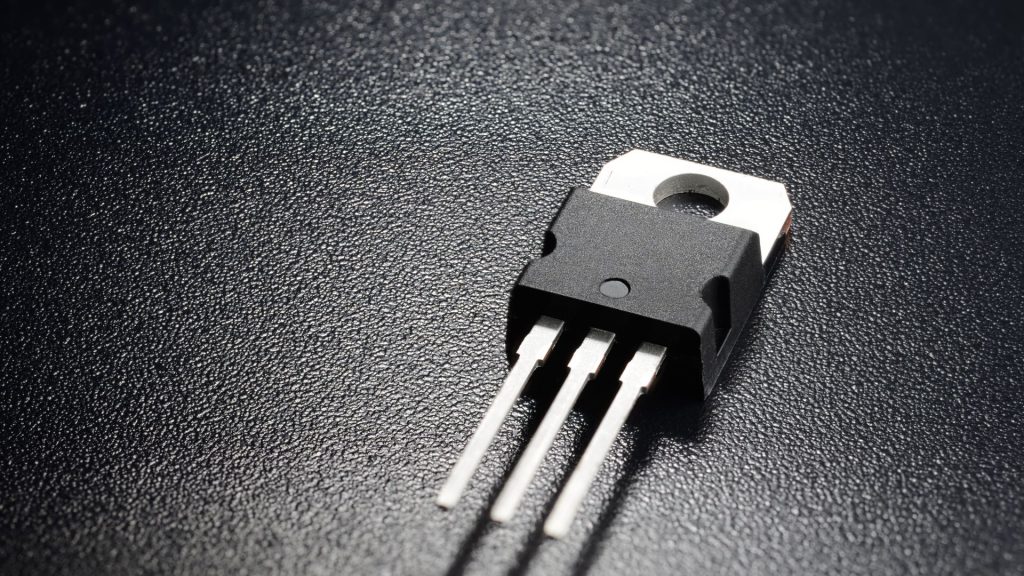
In the advanced electronic systems of 2026, power management is no longer a peripheral concern—it is a central design challenge. As devices grow smaller and more integrated, while the demand for high-performance AI processing and rapid energy conversion increases, engineers are forced to rethink traditional power architectures.
A POWER Transistor IC plays a pivotal role in this evolution by integrating power switching elements (like MOSFETs or IGBTs) with complex control and protection circuitry into a single, highly optimized package. This integration helps minimize parasitic losses and enables precise control over high-current pathways in industrial, communication, and automotive platforms.
1. Efficiency Through Advanced Switching and Low $R_{DS(on)}$
The efficiency of a power system is primarily dictated by two types of losses: conduction losses and switching losses. A high-quality POWER Transistor IC is designed to minimize both.
Conduction Losses
When the transistor is in the “on” state, it has an internal resistance known as $R_{DS(on)}$. The power lost as heat during this phase is calculated as:
By integrating the transistor into an IC, manufacturers can optimize the semiconductor geometry and reduce bond-wire resistance, leading to ultra-low $R_{DS(on)}$ values that save energy and reduce heat.
Switching Losses
Switching speed determines how much energy is lost while the transistor transitions between on and off states. An integrated POWER Transistor IC reduces parasitic inductance between the gate driver and the transistor gate. This results in faster, cleaner switching edges and a direct decrease in switching loss ($P_{sw}$), which is critical for high-frequency DC-to-DC converters and motor drives.
2. Enhancing Reliability through Thermal Management and Protection
Efficiency alone is not enough for mission-critical systems. Components handling substantial current loads must operate within their Safe Operating Area (SOA) for thousands of hours without failure.
The integration offered by a POWER Transistor IC allows for on-die thermal sensors and protection logic. If the junction temperature ($T_j$) exceeds safe limits, the IC can autonomously throttle the current or shut down to prevent catastrophic failure. Thermal management also becomes more predictable because heat is dissipated more evenly across the device package, reducing localized “hot spots” that often plague discrete designs.
Key Reliability Features:
-
Over-Voltage Protection (OVP): Safeguards the system against transient spikes.
-
Under-Voltage Lockout (UVLO): Ensures the IC only operates when the supply voltage is stable.
-
Short-Circuit Protection: Instantaneous shutdown during fault conditions to protect the entire PCB.
3. Comparison: Discrete Transistors vs. POWER Transistor IC
| Feature | Discrete MOSFET/IGBT Setup | POWER Transistor IC |
| Component Count | High (Requires external drivers/diodes) | Low (All-in-one integration) |
| Parasitic Inductance | High (Due to PCB traces) | Ultra-Low (Internal bonding) |
| Thermal Performance | Variable (Difficult to monitor $T_j$) | Superior (On-die thermal sensing) |
| PCB Footprint | Large | Compact / High Density |
| Design Complexity | High (Requires RF-level layout skills) | Lower (Pre-optimized internal layout) |
4. System-Level Benefits in Advanced 2026 Designs
Power efficiency has a cascading effect on system architecture. By utilizing a POWER Transistor IC, engineers can significantly reduce the Bill of Materials (BOM) and shrink the physical size of the power stage.
Tighter Design Tolerances: Integrated solutions reduce Electromagnetic Interference (EMI) because the current loops within the IC are much smaller than those on a PCB. This simplifies the filtering requirements and helps systems comply with strict EMC standards in aerospace and defense electronics.
Prestonics works closely with engineering teams to identify the specific POWER Transistor IC modules that align with their application’s voltage and current demands. Whether you are building a high-efficiency server power supply or a ruggedized industrial controller, integrating advanced power components early in the design phase is the most effective way to achieve scalability and reduce the need for costly redesigns.
Optimize Your Power Chain Today
In the competitive landscape of 2026, the efficiency of your power conversion is the key to product longevity and market success. Integrating a high-performance POWER Transistor IC is the strategic choice for engineers who refuse to compromise on either power density or reliability.
Prestonics provides the semiconductor expertise and the high-grade components needed to push the boundaries of modern electronics. To learn more about the advanced equipment and IC solutions we provide, contact us today.