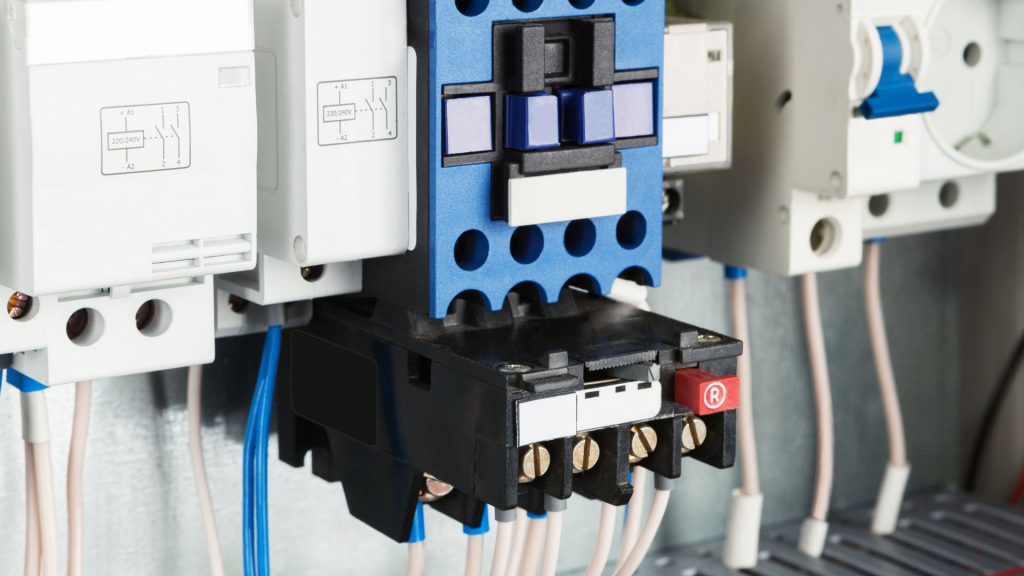
Electrical switching components play a central role in controlling power, activating circuits, and protecting sensitive equipment. Designers must choose from several options depending on the voltage, load type, switching speed, and reliability requirements of the system. Mechanical relays, heavy duty contactors, and solid state relays each offer advantages that suit different applications. For teams working on industrial automation, communication hardware, or power distribution modules, selecting correctly is essential for ensuring both safety and performance. Prestonics supports engineers by helping them evaluate suitable components that match system constraints while maintaining long term reliability.
Mechanical Relays and Their Ideal Use Cases
Mechanical relays are widely used for low to medium power applications because they provide galvanic isolation and straightforward operation. Their internal contacts physically open and close to control the circuit, making them well suited for tasks such as signal switching, small motor activation, or low frequency control operations. These devices can handle AC or DC loads and offer strong protection against electrical noise. However, because they rely on moving parts, relays have limited switching speed and a finite mechanical lifespan. When evaluating solutions alongside the RELAY CONTACTOR SSR comparison, engineers must consider how many cycles the component will perform and whether mechanical wear may affect long term performance.
When Contactors Provide the Best Performance
Contactors are designed for high current or high voltage applications where durability and safe operation are essential. They are commonly used in industrial machinery, HVAC equipment, motor control centers, and power distribution systems. Contactors provide robust electrical contacts, strong arc suppression methods, and the ability to handle frequent on and off cycles. Their construction allows them to manage large inductive loads that would quickly wear out smaller switching components. Unlike smaller relays, contactors are built to handle harsh operating environments and heavy mechanical stress. When comparing options within the RELAY CONTACTOR SSR selection process, it becomes clear that contactors are the preferred choice whenever high power switching is required.
Advantages of Solid State Relays in Sensitive Systems
Solid state relays operate without mechanical movement, relying instead on electronic switching components such as triacs, transistors, or optocouplers. This design eliminates contact wear and enables silent, high speed switching. Solid state relays work particularly well in environments where vibration, frequent cycling, or electrical noise would shorten the lifespan of mechanical switches. They also offer excellent isolation and low electromagnetic interference. These characteristics make them suitable for precision control systems, instrumentation, and temperature control modules. However, solid state relays generate heat during operation and may require proper thermal management. Understanding load type, switching frequency, and thermal constraints helps engineers determine whether an SSR is the optimal choice for their design.
With the assistance of Prestonics, companies can evaluate a variety of high quality switching solutions that support both current design needs and future scalability. Do not wait to improve your results. Get in touch and let our team assist you.