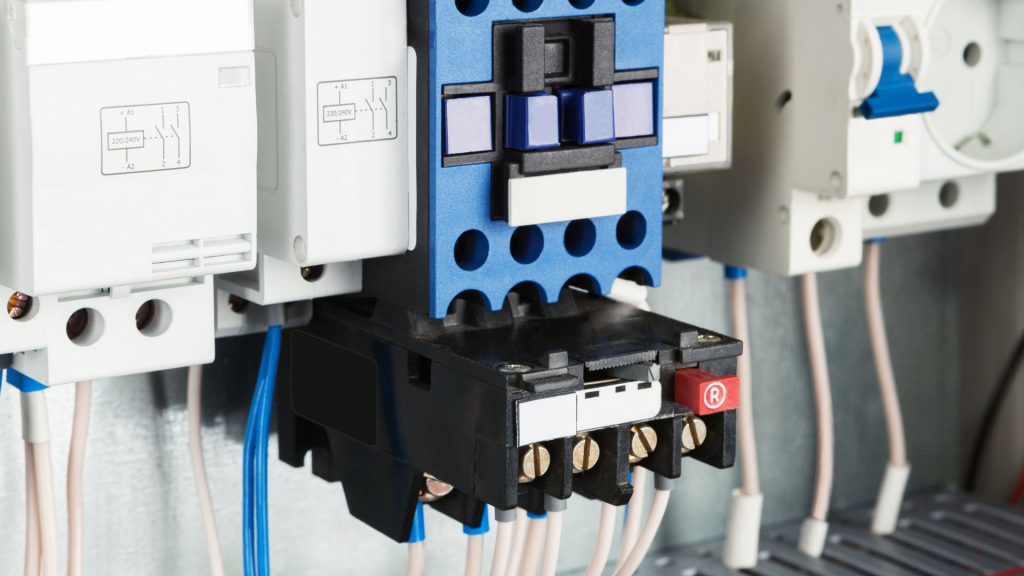
RELAY CONTACTOR SSR Selection Guide: Choosing the Right Switching Technology
In the advanced industrial landscape of 2026, selecting the correct electrical switching component is central to system safety and energy efficiency. Engineers must navigate the technical trade-offs between a RELAY CONTACTOR SSR setup based on load type, switching frequency, and galvanic isolation requirements.
Whether you are designing an automated assembly line or a high-precision medical device, understanding the core differences in the RELAY CONTACTOR SSR hierarchy is essential for long-term reliability.
1. Electromechanical Relays: Precision and Isolation
Mechanical relays remain a staple for low-to-medium power applications. Their primary strength is providing true galvanic isolation between the control circuit and the load.
When evaluating a RELAY CONTACTOR SSR solution, a mechanical relay is ideal for:
-
Signal Switching: Low contact resistance for sensitive data lines.
-
Cost-Effective Logic: Simple ON/OFF control without complex thermal management.
-
AC/DC Versatility: Ability to switch diverse load types with a single device.
Note: Relays are limited by their mechanical lifespan ($L_{mech}$), often rated in millions of cycles, which can be a bottleneck in high-frequency 2026 applications.
2. Heavy-Duty Contactors: High-Power Management
Contactors are essentially “relays on steroids,” specifically engineered for high-current and high-voltage inductive loads ($V > 400V$). In any RELAY CONTACTOR SSR comparison, the contactor wins in raw power handling.
Key Features of Industrial Contactors:
-
Arc Suppression: Built-in mechanisms to extinguish electrical arcs during switching.
-
Inductive Load Handling: Designed to manage the high inrush currents of large motors ($I_{inrush} \approx 6-10 \times I_{rated}$).
-
Durability: Built for harsh environments like HVAC and motor control centers.
If your system requires switching currents above $15A-20A$ frequently, the contactor is the industry-standard choice within the RELAY CONTACTOR SSR spectrum.
3. Solid State Relays (SSR): The Silent, High-Speed Alternative
The SSR represents the semiconductor-based evolution of switching. By utilizing optocouplers and triacs/MOSFETs, the SSR eliminates moving parts entirely.
Comparison Table: RELAY CONTACTOR SSR Performance Metrics
| Feature | Mechanical Relay | Industrial Contactor | Solid State Relay (SSR) |
| Switching Speed | Slow ($10-25ms$) | Moderate ($20-50ms$) | Ultra-Fast ($<1ms$) |
| Lifespan | Finite (Mechanical wear) | High (Replaceable contacts) | Near-Infinite (Electronic) |
| Heat Dissipation | Low | Low | High (Requires Heat Sink) |
| Acoustic Noise | Audible Click | Loud Thump | Silent |
| EMC/EMI | High (Arcing) | High | Low (Zero-Cross Switching) |
The performance of an SSR in a RELAY CONTACTOR SSR architecture is governed by its thermal resistance ($\theta_{JA}$), requiring precise calculations to prevent thermal runaway:
Making the Final Selection: RELAY CONTACTOR SSR
Prestonics supports engineering teams in 2026 by helping evaluate these switching constraints in real-time. Whether you need the silent precision of an SSR or the rugged power of a contactor, choosing correctly from the RELAY CONTACTOR SSR options ensures your project scales without failure.