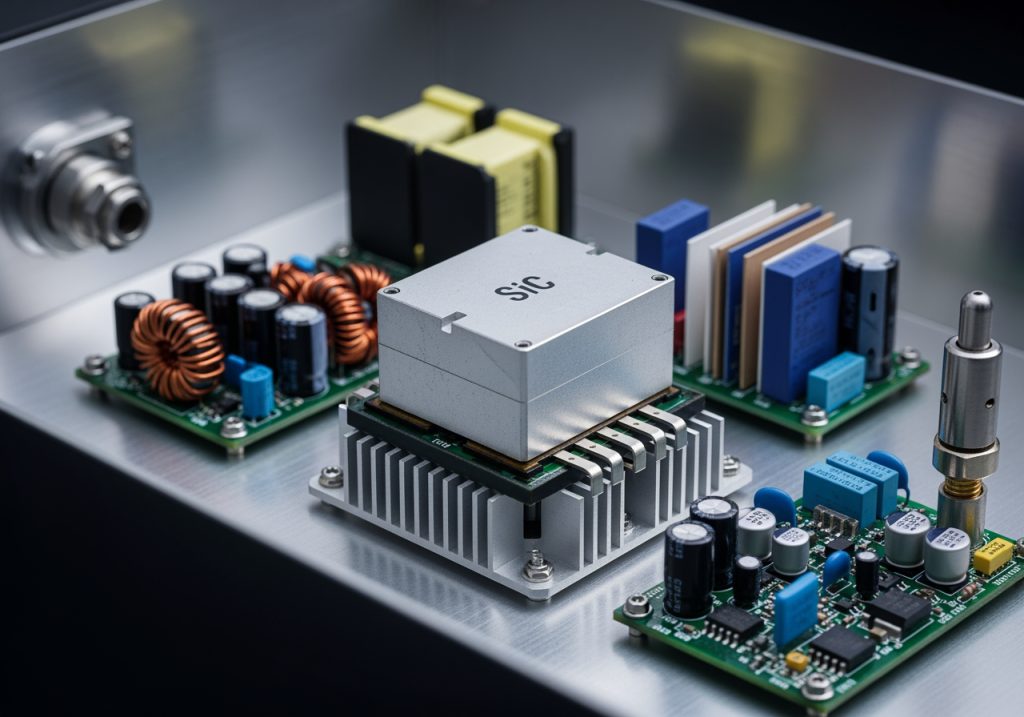
High voltage systems demand components that can handle extreme electrical stress while maintaining efficiency, stability, and thermal control. Traditional silicon based power devices have served industry needs for years, but modern applications such as renewable energy converters, electric vehicle platforms, defense electronics, and industrial power supplies now require performance levels that exceed silicon’s limitations. A SiC Device offers substantial improvements thanks to its wide bandgap material properties, allowing it to operate at higher voltages, higher temperatures, and higher switching frequencies. Prestonics assists engineering teams in integrating these advanced components into demanding applications, providing guidance that ensures compatibility with power architectures and long term system reliability.
Efficiency Gains That Reduce System Losses
One of the most significant advantages of silicon carbide devices is their ability to minimize conduction and switching losses. Wide bandgap materials have lower resistance and faster switching behavior, which leads to dramatically improved efficiency in power conversion stages. A SiC Device allows engineers to operate converters at higher frequencies, enabling smaller magnetic components and reducing overall system size. This improvement directly benefits applications such as solar inverters, power conditioning units, and motor drives where energy efficiency is a critical performance metric.
Superior Thermal Performance and High Temperature Operation
Heat management is often one of the greatest engineering challenges in high voltage systems. Silicon carbide devices can operate reliably at temperatures far beyond what traditional silicon components can tolerate. Their ability to function in elevated thermal environments reduces the need for bulky cooling solutions and lowers overall system cost. This is particularly valuable in compact or sealed enclosures found in military platforms, industrial machinery, telecom infrastructure, and transportation systems. The inherent thermal stability of a SiC Device ensures consistent electrical behavior even as temperatures fluctuate, supporting long service life and mission critical performance.
Faster Switching Speeds and Higher Power Density
In addition to improved efficiency and thermal behavior, silicon carbide technology enables faster switching speeds that significantly increase power density. This allows systems to deliver more power using smaller components, a key advantage as equipment becomes more compact and multifunctional. High switching speeds also improve transient response, reduce electromagnetic interference when properly managed, and support more precise control in motor drives and high voltage DC systems. Engineers can design lighter, smaller, and more efficient systems that still meet strict performance demands. Prestonics supports these high density architectures by providing component options that integrate smoothly into advanced designs without requiring major architectural changes. Do not wait to improve your results. Get in touch and let our team assist you.